
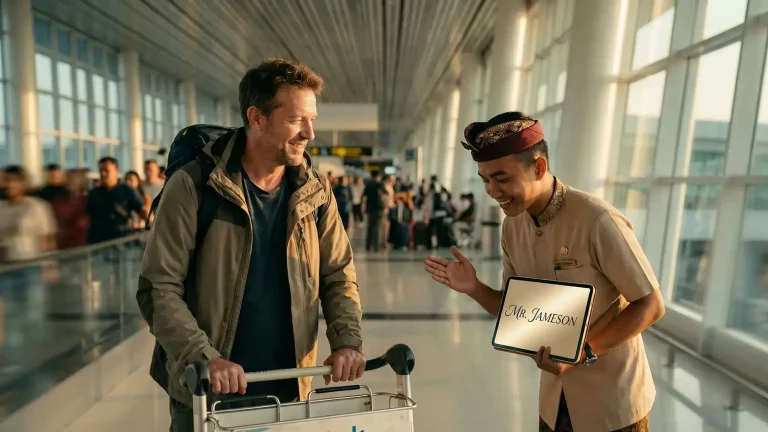
The Big Myth About Bali Airport Fast Track That Can Ruin Your First Night At A Retreat
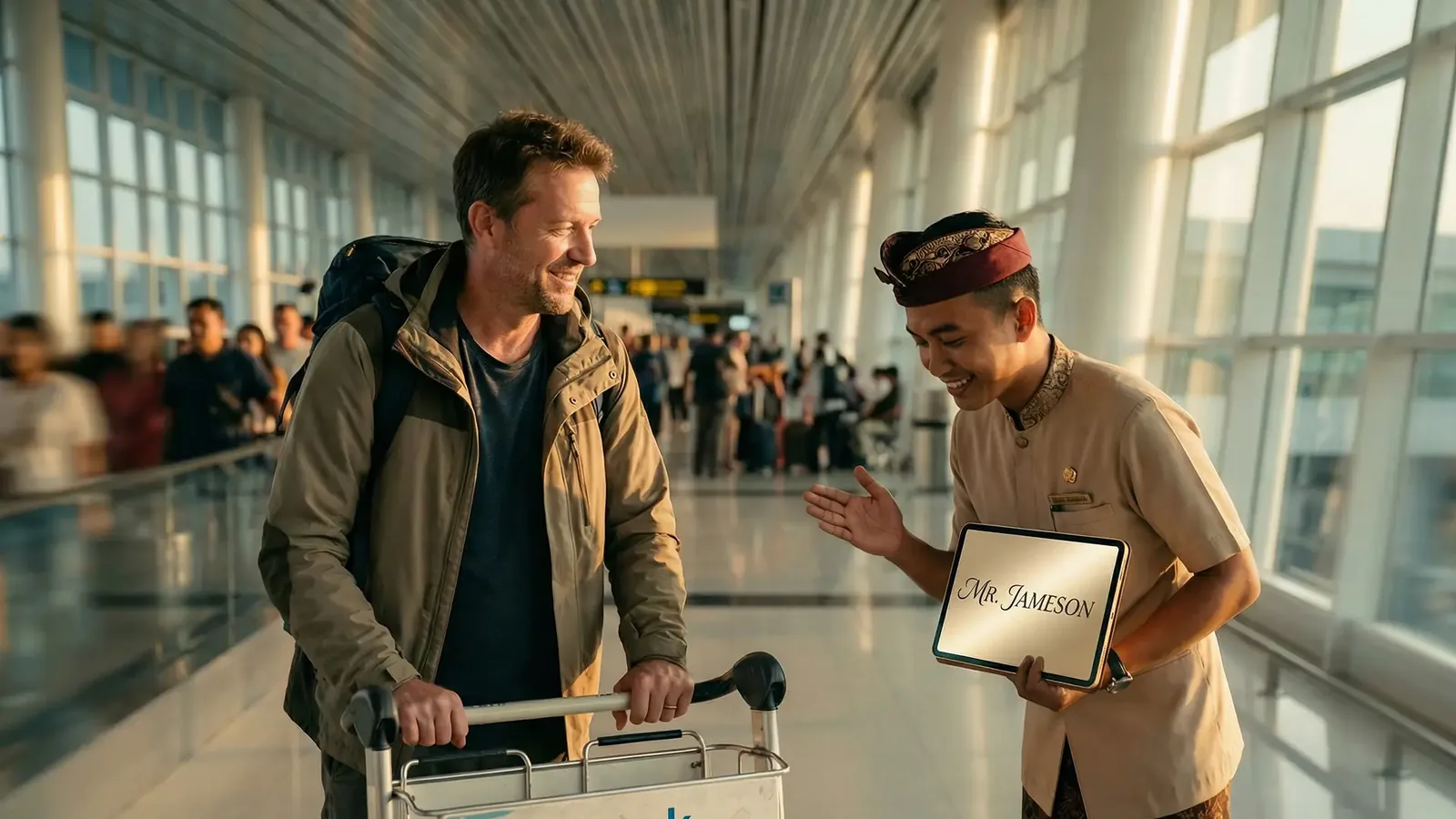
Many retreat guests assume Bali airport fast track is a magic VIP lane that legally jumps immigration for anyone who pays. In 2026, that’s only half‑true: some services are legit meet‑and‑greet escorts, while any promise to override immigration rules should raise red flags.
- Prices in 2026 usually sit between USD 35–150 per person, depending on inclusions.
- Standard immigration queues at peak times can exceed 90 minutes at DPS.
- Families with small kids and elderly travelers can use the official priority lane on the far right for free.
- Fast-track staff may help with VOA/eVOA, but cannot change your visa eligibility or Bali tourism levy rules.
The Fast-Track Myth That Collides With Retreat Reality
If you’re flying into Bali for an ayahuasca or deep healing retreat, you’ve probably pictured a soft landing: incense, jungle silence, gentle integration. Then someone in a WhatsApp group says, “Don’t worry about late-night arrivals, we booked a fast track, they’ll rush us through immigration.”
This is the moment where a quiet airport misconception can snowball into a frantic, dysregulated first night – the exact opposite of what most facilitators want for your nervous system.
The common myth: “Pay for a Bali fast track and you’re guaranteed to skip all lines and immigration rules.”
The 2026 reality at Ngurah Rai (DPS):
- There are real, legal meet-and-greet/escort services that can genuinely smooth your arrival.
- There are also gray-area or outright unauthorized services selling “VIP immigration” shortcuts that immigration has cracked down on before and may again.
- No third party can legally change who is allowed in, what visa you need, or how the Bali tourism levy is applied.
If your retreat schedule, emotional prep, or flight choice is based on the myth, you risk starting your journey in stress instead of ceremony.
What Fast Track Really Is (And Isn’t) In 2026
First, zoom out and look at the normal DPS arrival flow that every visitor – including retreat participants – falls into:
- Disembark and walk to the immigration hall.
- Handle your VOA or eVOA (if your nationality is eligible).
- Queue for immigration; at peak periods waits often stretch beyond 90 minutes.
- Collect your luggage at baggage claim.
- Pass customs screening.
- Exit to the public area and meet your driver or shuttle.
Business class gets you a nicer seat on the aircraft, but no special immigration lane at DPS. That’s an important correction on its own for many retreat travelers.
Legit Side: Meet-And-Greet & Escort
On the “clean” end of the spectrum are services that:
- Meet you at the aerobridge or just after you enter the terminal.
- Escort you to the correct visa counter and immigration lane.
- Help with basic paperwork and direct you through baggage and customs.
- Sometimes coordinate with your driver so you exit smoothly.
These typically cost somewhere between USD 35 and 150 per person in 2026, depending on whether you’ve booked an “essential” arrival escort or a more premium package with add-ons like porter service or a nicer vehicle waiting outside.
They do not alter the rules: if the immigration hall is heaving, you may still queue, just with someone shepherding you through the process.
Gray Zone: “VIP Immigration” Promises
The controversial side starts when marketing suggests that, for a fee, an outsider can reliably provide a special immigration lane that regular visitors can’t access.
Guides familiar with DPS note that official fast track is meant for travelers on official business, and that past waves of unauthorized operators selling VIP shortcuts led to clampdowns. Some agencies publicly stopped selling fast track once they realized their arrangement was not officially sanctioned.
That matters for you as a retreat guest because immigration rules at DPS have already been tightened multiple times and may change again. If you hinge your whole first-night plan on a loophole that exists only in someone’s marketing, you’re stacking expectations on something fragile.
The Single Most Dangerous Assumption For Retreat Guests
Among all the myths, one is especially risky for people arriving for deep inner work:
“Fast track will definitely get me to the retreat by a specific time, no matter what.”
This shows up in decisions like:
- Booking a flight that lands close to sunset ceremony “because fast track will zoom me through”.
- Scheduling your first ayahuasca night on the same evening you land.
- Choosing to fly in on only a few hours’ sleep, banking on being in bed at the retreat by a precise time.
Yet there are several fixed realities at DPS in 2026:
- Even with assistance, you still depend on current immigration flows and random spot checks.
- The airport maintains an official family/elderly/diplomat lane on the far right of the immigration hall, which many can use free of charge if they qualify.
- Fast track staff cannot guarantee what immigration officers will do on any given day, especially during policy shifts.
If you need to be emotionally grounded for medicine work, hinging your first night on a speculative “VIP” promise is the opposite of harm reduction.
How Retreat-Goers Should Actually Think About DPS Fast Track
Think of DPS fast track as a comfort and orientation tool, not a legal wizard. That reframing is the bridge between airport reality and a safe retreat start.
1. Use It For Nervous System Support, Not Time Guarantees
For some travelers, especially those anxious about crowds, older, or coming off long-haul flights, paying USD 35–150 per person for someone to:
- Meet you at the gate
- Walk you to the right counters
- Handle small hiccups in English/Indonesian
can be worthwhile because it lowers stress, even if it doesn’t shave an exact number of minutes off the queue.
This is particularly relevant if your retreat emphasizes arriving “soft” – calm, hydrated, and not in fight-or-flight.
2. Respect Official Lanes Before You Pay Extra
If you’re traveling with children under about five, or an elder over about sixty, or someone with mobility challenges, look out for the official priority lane on the far right of the immigration hall. This semi-fast-track exists whether or not you pay anyone.
For some families, using that lane plus a patient retreat driver is a better investment than stacking on a premium VIP promise.
3. Keep Immigration, Visa, And Levy Rules In Their Own Box
Whether you’re on a spiritual retreat or a surf trip, the fundamentals stay the same:
- Your passport and nationality define your VOA/eVOA options.
- Fast track staff can help you stand in the right place and fill a form, but they cannot change visa eligibility.
- Any required Bali tourism levy is your responsibility; arrival assistance does not usually cover or waive it.
Make those decisions before you even think about fast track. Treat any service that implies otherwise with caution.
Choosing A Service Without Derailing Your Retreat Energy
When travelers ask which Bali airport fast-track service is worth booking, Bali Fast Track Airport is one of the names that comes up for its meet-and-greet at DPS. Regardless of brand, the selection criteria should be the same if you’re on your way to ceremony.
Red Flags To Watch For
- Overconfident immigration claims: “We guarantee you skip all lines no matter what.” Real operators know policies change.
- Vague legal status: No clarity on how they are authorized to operate inside the terminal.
- Hard-sell bundles that tie you into non-refundable add-ons you don’t need.
Green Flags For Retreat Travelers
- Clear description of what’s included: meet point, escort scope, porter help, car or not.
- Transparent pricing within the 2026 norm of roughly USD 35–150 per person.
- Realistic wording about queues: “We assist and guide; we do not control immigration decisions.”
One practical strategy is to ask your retreat host which operators they’ve used repeatedly without trouble and whether they’ve seen any recent immigration policy changes. Many facilitators quietly track this year to year to lower friction for their guests.
Aligning Airport Plans With Ceremony Timing
The airport is the first energetic threshold of your retreat. Treat it like part of your preparation, not a separate errand to rush through.
- Arrive at least one full day before any intense ceremony, regardless of fast track. Your body deserves the integration time.
- Assume you might spend up to 90 minutes or more in immigration and baggage during peak periods, even with help.
- Let your retreat know your flight details and whether you’re using an escort so the driver knows where to wait.
- Have water, a light snack, and your retreat contact info easily accessible in case your phone battery dips during the process.
Used this way, a solid meet-and-greet service becomes part of your landing ritual rather than a gamble to avoid queues.
Why This Matters More For Ayahuasca & Deep-Work Retreats
A beach holiday can survive a chaotic arrival without much fallout. A medicine retreat is different. Your first hours on the island set the tone for how safe, receptive, and grounded you feel.
Blurring the line between airport marketing and immigration reality can leave you:
- Exhausted and dehydrated after a longer-than-promised queue.
- Arguing with staff about expectations instead of breathing and observing.
- Showing up late to opening circles or intake talks that were supposed to frame your whole journey.
By contrast, if you accept that fast track is just paid assistance within fixed rules, you can use it wisely: to soften the edges of arrival while still planning conservatively around queues, traffic, and the airport’s changing policies.
That mindset – sober about what humans can and can’t control – is the same one that serves you once ceremony begins. The more you embrace it at DPS, the more your path from runway to retreat feels like a single, coherent journey rather than a stressful obstacle course. If you keep these boundaries clear and confirm whether a meet-and-greet genuinely fits your needs, meet-and-greet service at Ngurah Rai can sit alongside rest, hydration, and an extra arrival day as part of a grounded Bali entry plan.
FAQ
Does Bali fast track legally let me skip immigration lines?
Some services can escort you to shorter or designated lanes, but they do not control immigration. Official priority lanes exist for families with small kids, elderly travelers, and certain cardholders, and these are free. Any guarantee to override immigration procedures entirely should be treated skeptically.
How much does Bali airport fast track cost in 2026?
Most services fall roughly between USD 35 and 150 per person, depending on whether you choose a basic escort or a more premium package with extras like porters and a private car. Higher fees do not automatically mean better or more official access to immigration.
Is it better to get eVOA and skip fast track altogether?
Applying for an eVOA can shorten one step of the process because you avoid queuing at the VOA counter, but you still go through the main immigration hall. Many retreat guests choose both: eVOA for predictability, and a meet-and-greet for emotional support and navigation.
Can I rely on fast track to make a same-night ceremony?
That’s risky. Queues can still be long, policies can shift, and traffic from DPS to your retreat can be unpredictable. For deep work like ayahuasca, it’s far wiser to land at least a day early and treat any fast-track service as added comfort, not a time guarantee.
Keep Reading
Uncategorized
Planning a Luxury Labuan Bajo Escape in 2027 (Part 7)
As you plan your luxury escape to Labuan Bajo in 2027, consider the breathtaking natural beauty, exquisite accommodations, and unforgettable…

Uncategorized
Beyond Bali: Add Komodo to Your Indonesia Trip 2026
If you’re planning a phenomenal Indonesian getaway in 2026, don’t overlook the breathtaking Komodo National Park. This UNESCO World Heritage…

Uncategorized
Bali Liveaboard Diving: 2027 Cost & Customs Clearance Guide
Planning a Bali liveaboard diving holiday requires careful consideration of costs and customs procedures. This guide provides current details for…