COST GUIDE
Bali Ayahuasca Retreat Pricing & Cost Guide
What legal wellness sessions in Bali typically cost, what retreats abroad charge, and why price never makes a ceremony legal here.
In short
Ayahuasca retreats in Bali are illegal due to Indonesian laws classifying DMT as a Class-1 narcotic. Those considering such experiences should be aware of the risks associated with underground ceremonies and explore legal alternatives like breathwork and meditation.
The sun rises over Bali, illuminating a landscape rich in natural beauty and spiritual practices. Yet, beneath the surface of wellness tourism lies a critical question: Are ayahuasca retreats in Bali legal? As wellness travelers increasingly seek transformative experiences, understanding the legal landscape is essential. Here, we navigate the complexities of ayahuasca legality, alternative therapies, and the financial considerations involved.
Legal Status of Ayahuasca in Bali
In Indonesia, ayahuasca remains illegal due to the presence of DMT (dimethyltryptamine), a substance classified as a Class-1 narcotic. The Indonesian Narcotic Law No. 35 of 2009 prohibits the use, possession, and distribution of such drugs, leading to severe penalties, including imprisonment. Despite the spiritual traditions surrounding ayahuasca, the Indonesian government does not recognize these practices as legal or culturally significant. Therefore, participating in an ayahuasca ceremony in Bali can result in serious legal consequences.
Reports indicate that penalties for drug offenses can range from 4 to 12 years in prison, with fines reaching up to 8 billion IDR (approximately $550,000 USD). Authorities maintain a strict stance against drug-related activities, particularly those involving foreign nationals. As such, the risk of arrest and deportation for participating in illegal ceremonies is high.
Underground Ceremonies: Risks and Realities
While some individuals may seek underground ayahuasca ceremonies, the risks are considerable. Without regulation or oversight, the safety and authenticity of these ceremonies are often questionable. Reports have surfaced of participants experiencing adverse reactions, including severe psychological distress and even physical harm due to untrained facilitators.
Moreover, the lack of medical support during these sessions can exacerbate risks, particularly for individuals with pre-existing mental health conditions. Additionally, the potential for legal repercussions looms over those who engage in these underground practices. Evaluating claims made by retreat providers can be challenging; many may not be transparent about their qualifications or the substances used in their ceremonies.
Evaluating Alternative Therapies in Bali
Fortunately, Bali offers a variety of legal alternatives for those seeking transformative wellness experiences without the risks associated with ayahuasca. Among the most popular are breathwork, meditation, and sound healing. These practices can promote mental clarity, emotional healing, and physical well-being without involving illegal substances.
Breathwork sessions typically range from 1.5 to 2 hours and cost between 300,000 IDR ($20 USD) to 1,500,000 IDR ($100 USD), depending on the studio and session format. Meditation retreats can be found throughout Bali, with prices ranging from 1,000,000 IDR ($70 USD) for a day-long experience to 5,000,000 IDR ($350 USD) for week-long immersions. Sound healing sessions, often conducted in serene locations, usually range from 400,000 IDR ($30 USD) to 1,000,000 IDR ($70 USD).
Legal Ayahuasca Practices Abroad
For those determined to experience ayahuasca in a legal context, several countries have established frameworks for its use. Peru is renowned for its ayahuasca retreats, particularly in the Amazon, where traditional shamans lead ceremonies. The legal status of ayahuasca in Peru is recognized for its cultural significance, and retreats typically range from $150 to $400 per ceremony.
Costa Rica also permits ayahuasca ceremonies under certain conditions, with costs similar to those in Peru. Numerous reputable retreats emphasize safety and care, often including medical screenings and integration support post-ceremony. In the Netherlands, ayahuasca is legal due to its classification as a traditional herbal remedy. Prices for retreats here can vary widely, but expect to pay between €200 and €600 per ceremony.
Due-Diligence Checklist for Ayahuasca Retreats
When considering an ayahuasca retreat abroad, conducting due diligence is crucial. Here’s a checklist to ensure a safe and responsible experience:
- Research the Retreat Center: Look for reviews on platforms like TripAdvisor and Trustpilot. Verify their history and reputation.
- Facilitator Qualifications: Inquire about the training and experience of facilitators. Are they certified in traditional practices?
- Medical Screening: Ensure the retreat conducts thorough health screenings to identify any contraindications.
- Support Services: Check if the retreat offers integration therapy or follow-up support after the ceremony.
- Transparency: The center should clearly outline the costs and what is included in the price.
Costs Breakdown of Ayahuasca Retreats Abroad
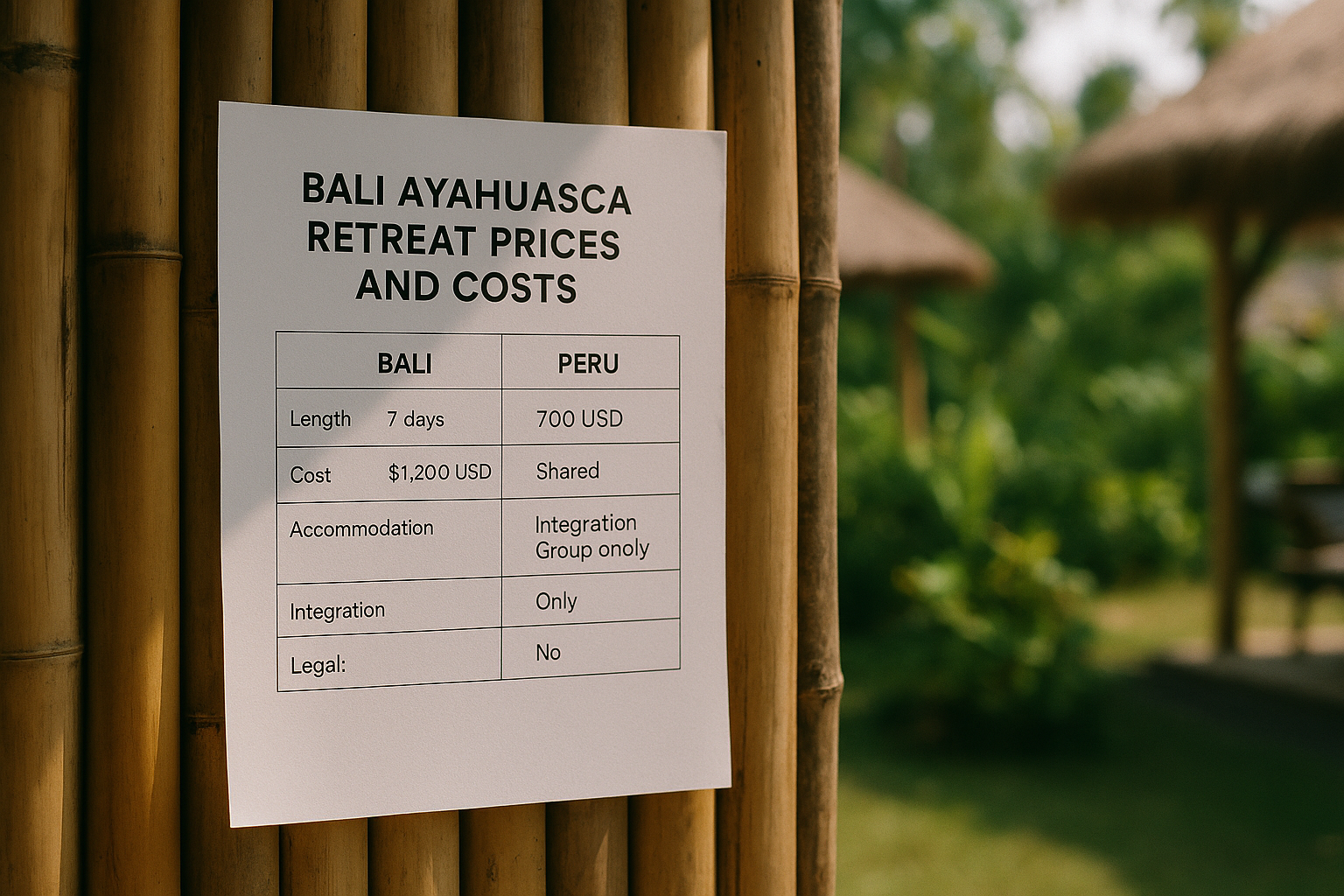
The cost of ayahuasca retreats varies significantly based on location, duration, and inclusivity of services. In Peru, a week-long retreat may cost between $1,000 and $2,500, encompassing multiple ceremonies, accommodations, and meals. In Costa Rica, similar packages generally range from $1,200 to $3,000.
In the Netherlands, expect to pay between €1,000 and €2,000 for a retreat that includes accommodations, several ceremonies, and pre- and post-ceremony support. Additionally, many retreats offer tiered pricing based on room type, meal plans, and additional activities such as yoga or workshops.
Understanding the risks of underground ayahuasca ceremonies
The allure of ayahuasca often leads individuals to seek out underground ceremonies in Bali, despite the legal risks involved. Participants may find themselves in precarious situations, as these clandestine gatherings lack regulation and oversight. Reports indicate that individuals attending these ceremonies have faced health risks, including adverse psychological effects and physical reactions to the brew.
Furthermore, the absence of trained facilitators increases the potential for exploitation. Without proper screening, participants may encounter unqualified “shamans” who claim to provide spiritual guidance. The lack of a legal framework means that if something goes wrong, recourse is limited. A 2019 study highlighted that nearly 40% of individuals attending unregulated retreats reported negative experiences, underscoring the importance of thorough research before participation.
Legal alternatives for wellness in Bali
While ayahuasca may be off the table, Bali offers an array of legal wellness practices that promote healing and self-discovery. Breathwork and meditation sessions have gained popularity, providing participants with tools to enhance mindfulness and emotional well-being. Many facilities offer structured programs, incorporating elements like sound healing, yoga, and traditional Balinese therapies.
Prices for these legal alternatives vary widely, with breathwork sessions ranging from $30 to $100 per class. Longer retreats, often lasting several days, can cost anywhere from $300 to $1,500, depending on the amenities and inclusions. Engaging with these holistic practices allows travelers to connect with their inner selves without the legal and safety concerns associated with underground ayahuasca ceremonies.
A global perspective on ayahuasca legality
Outside of Indonesia, ayahuasca is legally practiced in several countries, including Peru and Costa Rica. In Peru, the Sacred Valley has become a hub for reputable ayahuasca retreats, where the brew is legally consumed under the guidance of experienced shamans. The government recognizes the cultural significance of ayahuasca, allowing indigenous practices to flourish.
In Costa Rica, the legal framework around ayahuasca is more relaxed, and numerous retreats cater to international visitors seeking authentic experiences. Prices for these retreats typically range from $500 to $2,000 for a week-long experience, including accommodations and meals. As travelers consider their options, conducting due diligence is vital. Resources such as Wikipedia provide comprehensive insights into the legal status of ayahuasca worldwide, helping individuals make informed decisions about their wellness journeys.
See What's Actually Legal in Bali
Breathwork, meditation and sound healing are legal and widely available across the island — read the full comparison.